
Tenant Screening in Texas: Dallas Landlord Guide 2026
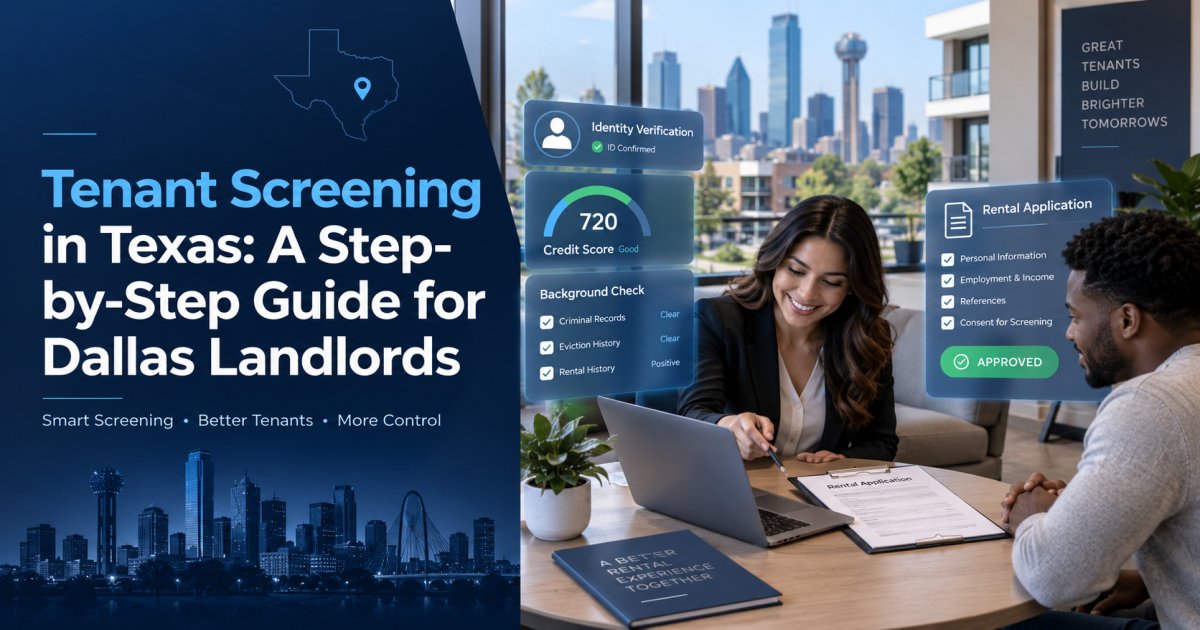
Tenant Screening in Texas: A Step-by-Step Guide for Dallas Landlords
Finding a tenant is easy.
Finding a tenant who pays reliably, respects your property and remains for the duration of the lease requires a much better process.
For Dallas rental-property owners, tenant screening is one of the most important risk-management steps before handing someone the keys.
Here is how to create a more organized screening process.
What Is Tenant Screening?
Tenant screening is the process landlords use to evaluate rental applicants before approving a lease.
Screening commonly considers:
- Identity
- Income
- Credit history
- Rental history
- Employment
- Eviction information
- Background information where legally appropriate
- Information supplied in the rental application
The goal should be to apply consistent, documented rental criteria rather than making subjective decisions.
Step 1: Establish Written Tenant Selection Criteria
Create your rental criteria before reviewing applicants.
Texas Property Code §92.3515 specifically addresses making tenant-selection criteria available to rental applicants and identifies factors such as criminal history, previous rental history, current income, credit history and inaccurate or incomplete application information.
Your criteria might cover areas such as:
- Income requirements
- Credit requirements
- Rental history
- Occupancy standards
- Application completeness
- Required documentation
Use the same process consistently.
Step 2: Collect a Complete Rental Application
An incomplete application makes verification difficult.
Collect enough information to properly evaluate the applicant while avoiding information you do not legitimately need.
An organized digital application system can help keep every applicant's information in the same workflow.
Step 3: Verify Identity
Identity verification is increasingly important because application fraud can include altered documents or false information.
Before relying on financial or employment documentation, make sure the information belongs to the person submitting the application.
Step 4: Verify Income
A high credit score does not automatically mean someone can comfortably afford the property.
Verify income using appropriate supporting documentation and consistently applied criteria.
Depending on the applicant, documentation may include:
- Pay information
- Employment verification
- Bank or income documentation where appropriate
- Supporting records for self-employed applicants
The purpose is simple: determine whether the rent is realistically affordable under your established criteria.
Step 5: Review Credit Information
Credit information can help landlords evaluate how an applicant has historically handled financial obligations.
Do not look at the score alone.
Where appropriate, review the broader picture rather than treating one number as the entire applicant.
If a consumer report is used for tenant screening, Fair Credit Reporting Act requirements can apply. The FTC specifically explains that landlords using consumer reports for rental decisions have obligations before obtaining reports and when taking certain adverse actions based on them.
Step 6: Check Rental History
Previous rental behavior can provide useful context.
Where appropriate, verify:
- Previous addresses
- Length of tenancy
- Rent payment history
- Lease compliance
- Outstanding balances
- Previous landlord references
Again, use the same verification process for applicants rather than changing criteria from person to person.
Step 7: Follow Fair Housing Requirements
Tenant screening is not simply about finding the applicant you personally prefer.
The Fair Housing Act prohibits housing discrimination based on protected characteristics.
HUD guidance recommends that housing providers use screening practices that are relevant, accurate and applied in a nondiscriminatory manner.
This is another reason written criteria are so important.
The decision should follow the criteria—not personal impressions.
Step 8: Document the Decision
A landlord may receive several applications at the same time.
Without a structured process, information quickly becomes scattered across:
- Text messages
- PDFs
- Paper applications
- Spreadsheets
- Screening websites
Keep applications and decisions organized.
A clear record makes managing the leasing process much easier.
Common Tenant Screening Mistakes
Accepting the First Applicant Immediately
Vacancy costs money, but rushing screening can create much larger problems later.
Using Different Rules for Different Applicants
Establish criteria before evaluating applications and apply them consistently.
Relying Only on a Credit Score
Credit is only one part of the picture.
Not Verifying Information
Do not assume every document or statement is accurate simply because it appears professional.
Poor Documentation
A landlord should be able to understand how and why an application moved through the screening process.
How Technology Simplifies Tenant Screening
Modern property-management software can create a repeatable workflow:
Application → Review → Screening → Owner Decision → Approval/Rejection → Onboarding
Instead of manually sending different emails and updating spreadsheets, the workflow can remain connected.
PropCompanion provides owners with a tenant-management workflow where pending applications can be reviewed and approved or rejected from the owner dashboard.
That means the technology helps organize the process while the owner remains involved in important decisions.
Tenant Screening Is About Risk Reduction
No screening process can predict the future perfectly.
The purpose is to make a better-informed decision using legitimate, consistently applied information.
Strong tenant screening can help reduce the likelihood of problems involving:
- Unpaid rent
- Repeated lease violations
- Unexpected turnover
- Fraudulent applications
- Communication problems
For rental owners, preventing one serious tenancy problem can be worth far more than the time spent creating a proper screening process.
Frequently Asked Questions
What is tenant screening?
Tenant screening is the process landlords use to evaluate rental applicants based on predetermined criteria before approving a lease.
Can Texas landlords check credit?
Credit information may be used in tenant screening subject to applicable law, including federal requirements concerning consumer reports.
Should landlords verify tenant income?
Income verification is a common component of rental screening and helps determine whether an applicant meets established affordability criteria.
What tenant screening criteria should landlords use?
Criteria may include income, rental history, credit information and application accuracy, but landlords should ensure their policies comply with applicable federal, state and local requirements.
Can software automate tenant screening?
Software can organize applications, documentation, screening workflows and notifications. Important housing decisions should still follow legally compliant criteria and appropriate human oversight.
Important: This article provides general educational information and is not legal advice. Rental-property owners should obtain professional advice regarding their particular circumstances.
Manage Tenant Applications Without the Chaos
PropCompanion brings tenant onboarding, owner approvals, rental-property information, payments and maintenance workflows together in one platform.
Explore PropCompanion and simplify the way you manage your tenants.

Keep exploring: screening rental applicants, how the AI maintenance assistant works, plans and pricing, or browse available rentals.