How to Reduce Rental Vacancy in Dallas: 9 Landlord Tips
How to Reduce Rental Vacancy in Dallas
A vacant rental property does not simply produce zero income.
The owner may still be paying:
- Mortgage
- Property taxes
- Insurance
- Utilities
- Landscaping
- HOA charges
- Maintenance
That makes vacancy one of the most important numbers for a Dallas rental-property owner to control.
And in 2026, landlords cannot always assume that a rental will lease immediately simply because Dallas is a large market.
Recent market data demonstrates how much leasing conditions can vary by property type and location. Doorstead's July 2026 DFW data, for example, reported materially different days-on-market figures across Dallas-area cities and property categories. Zillow also reported an average Dallas rent of $1,605 in July 2026 using its own methodology.
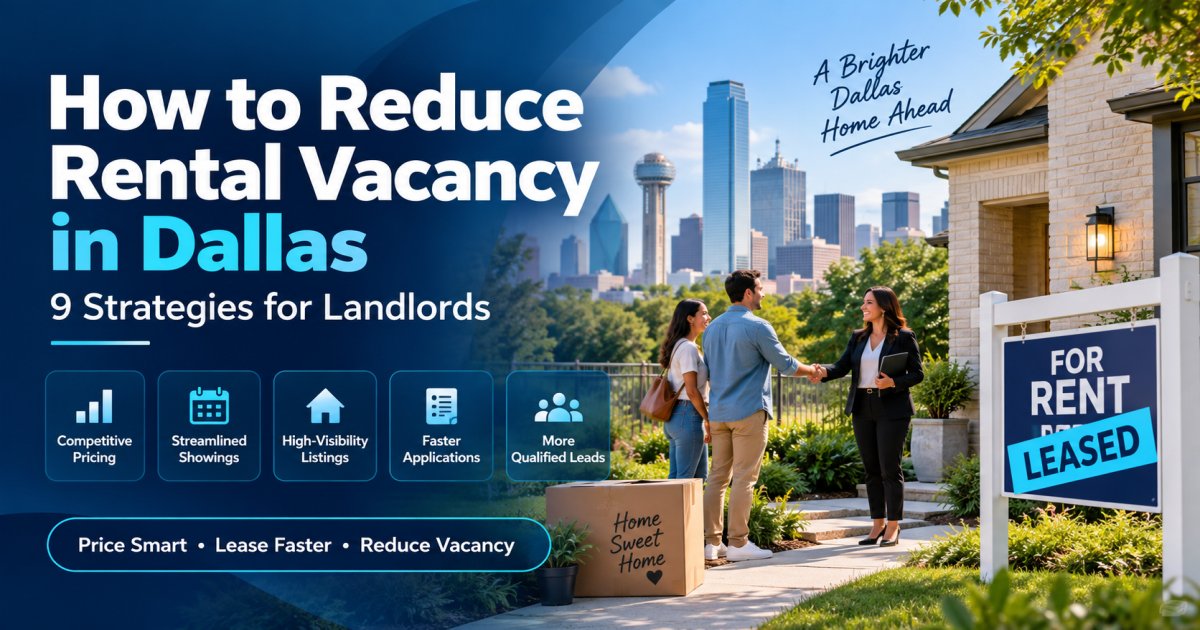
Here are nine ways landlords can compete more effectively.
1. Price the Rental Correctly From Day One
One of the fastest ways to create unnecessary vacancy is overpricing.
Imagine your target rent is $2,500.
You decide to list at $2,700 hoping someone will negotiate.
The property sits vacant for another month.
That lost month costs approximately $2,500 in potential rent.
Even if you later secure an extra $100 per month, it would take 25 months to recover the value of one $2,500 vacant month.
The lesson:
Maximum rent is not always maximum return.
Consider both monthly rent and expected vacancy.
2. Study Comparable Rentals
Do not price your property based only on what you want it to earn.
Look at competing properties with similar:
- Bedrooms
- Bathrooms
- Square footage
- Property type
- Neighborhood
- Condition
- Amenities
- Parking
- School access where relevant
Also examine how long listings remain available.
Active listings show asking prices.
Recently leased comparables provide a stronger indication of what tenants actually accepted.
3. Improve the Rental Listing
Tenants often decide whether they are interested before reading the full description.
Photos matter.
Use clear images of:
- Exterior
- Kitchen
- Living room
- Bedrooms
- Bathrooms
- Outdoor space
- Parking
- Important amenities
Avoid dark, blurry or cluttered photographs.
Your property may be excellent in person, but the listing has to earn the showing first.
4. Write for the Tenant, Not the Property Owner
Weak listing:
Three-bedroom house. Available now. Call for details.
Better listing:
Well-maintained three-bedroom Dallas rental with an open living area, updated kitchen, private backyard and convenient access to nearby shopping and major routes.
Describe the actual benefits without exaggerating or using wording that could create Fair Housing issues.
5. Respond to Rental Leads Quickly
A prospective tenant rarely contacts only one property.
They may submit inquiries to five or ten rentals within an hour.
If your response arrives the next day, another landlord may already have scheduled a showing.
Fast follow-up can be a competitive advantage.
Create a repeatable lead workflow:
Inquiry → qualification questions → showing → application → screening → owner decision.
6. Make Applying Easy
Once a renter wants the property, avoid unnecessary friction.
An online application process can help organize the information and reduce paperwork.
However, convenience should not mean careless screening.
Speed and proper screening should work together.
7. Screen Consistently
The goal is not simply to fill the vacancy.
It is to fill the vacancy with a qualified tenant using appropriate and consistently applied rental criteria.
Placing a poorly screened tenant quickly can create much more expensive problems later.
Use a documented process for each applicant.
8. Keep the Property Rent-Ready
Small cosmetic issues can make a rental feel neglected.
Before showings, review:
- Cleanliness
- Paint
- Lighting
- Flooring
- Odors
- Landscaping
- Fixtures
- Appliances
- HVAC
- Doors and locks
A tenant comparing two similarly priced homes may choose the one that feels ready for immediate occupancy.
9. Begin Renewal Conversations Before the Property Becomes Vacant
The best vacancy may be the vacancy that never happens.
Do not wait until the final days of the lease to learn whether a reliable tenant intends to leave.
Track lease-expiration dates and start the renewal process early enough to plan.
If the tenant renews, you avoid:
- Marketing
- Showings
- Vacancy days
- Turnover cleaning
- New tenant onboarding
If they leave, you have more time to prepare.
Calculate What Vacancy Is Actually Costing You
Use this simple formula:
Monthly rent ÷ 30 = approximate daily vacancy cost
If your property rents for $2,400:
$2,400 ÷ 30 = $80 per vacant day
Ten unnecessary vacancy days:
$80 × 10 = $800 lost potential rent
Thirty days:
$2,400
This is why responding to leads, pricing properly and planning turnovers matters so much.
Don't Increase Rent Without Considering Turnover
Suppose a reliable tenant pays $2,300.
You could potentially increase rent to $2,400, but the tenant decides to leave.
Your potential annual increase was:
$100 × 12 = $1,200
But a single month of vacancy at $2,400 has already cost twice that potential increase, before cleaning, marketing or turnover expenses.
Rent decisions should consider total annual return, not simply maximum monthly rent.
Use Technology to Reduce Leasing Delays
Rental management becomes easier when the workflow is connected.
A system that tracks:
- Leads
- Tenant applications
- Approvals
- Move-in
- Rent
- Maintenance
- Lease expiration
reduces the chances that important tasks disappear inside emails and spreadsheets.
PropCompanion's Pro workflow includes leasing assistance and lead-generation support alongside tenant-management and property-management tools.
Frequently Asked Questions
How long does it take to rent a property in Dallas?
It varies significantly by neighborhood, property type, condition, price and current market conditions. Owners should compare current local listings rather than relying on a single metro-wide number.
Why is my Dallas rental property not getting applications?
Common causes include pricing, weak photos, poor listing distribution, property condition, restrictive terms or slow response to inquiries.
Should I lower the rent to reduce vacancy?
Sometimes a modest price adjustment can produce a better annual return than holding out for a higher monthly price while the property remains vacant.
How do landlords find tenants faster?
Competitive pricing, good photos, clear listings, fast lead response, simple applications and an organized leasing workflow can all help.
How much does one month of vacancy cost?
At minimum, approximately one month of potential rental income, plus any property expenses that continue during vacancy.
Fill Vacancies Without Losing Control
PropCompanion helps owners bring leasing, tenant onboarding, rent management and ongoing property operations together in one system.
Spend less time chasing information and more time managing the performance of your rental portfolio.
Explore PropCompanion today.

Keep exploring: screening rental applicants, how the AI maintenance assistant works, plans and pricing, or browse available rentals.